 |
CHAMÄLEON + ONJALA OBSERVATORY DeepSky | SITEMAP HOME CHAMÄLEON |
|
 |
|||
| « zurück zur Startseite
galaktische Nebel « back to home galactic nebula |
Großes Bild laden - load large image 2048 x 1400
Pixel Aufnahmedaten Image data |
 Objektbeschreibung Objektbeschreibung  Objekt
descripion Objekt
descripion |
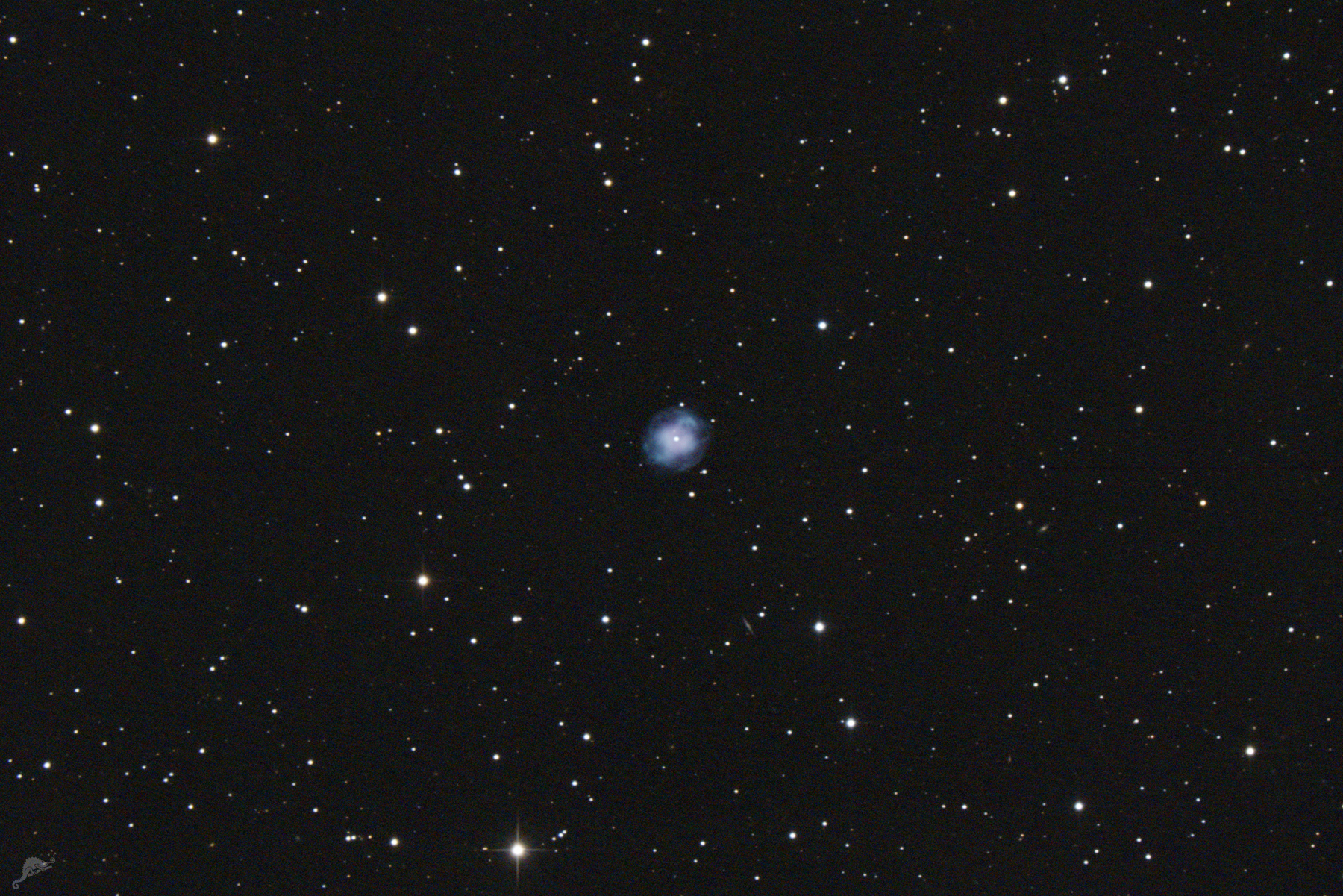
NGC 4361 - a planetary nebula in the constellation Corvus
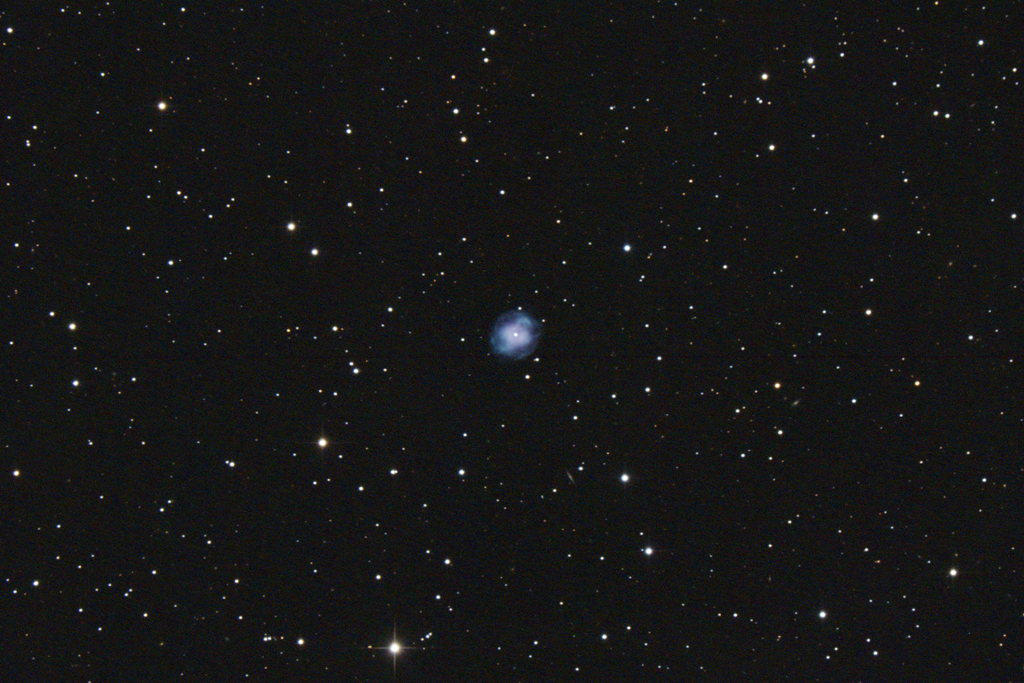
NGC 4361 - ist ein kleiner planetarischer Nebel im Sternbild Rabe. Der helle und markante Zentralstern (13m0), der im Henry-Draper-Katalog die Bezeichnung HD 107 969 trägt, ist ein extrem heißer Stern vom Typ Wolf-Rayet (WC) mit einer Temperatur von etwa 125.000 Grad. Somit ist NGC 4361 vermutlich kein klassischer planetarischer Nebel, sondern eher ein Wolf-Rayet Nebel ähnlich NGC 6164/65 oder andere Objekte, die einen Wolf-Rayet Stern im Zentrum haben. Das Objekt ist etwa 3.500 Lichtjahre vom Sonnensystem entfernt und das Alter der Gashülle wird auf knapp 10.000 Jahre geschätzt.
Aufgrund seiner spiralförmigen Struktur hat er im englisch-sprachigem Raum den Spitzname "Rasensprenger Nebel". Die Spiralstruktur lässt vermuten, dass es sich bei dem Zentralstern nicht um einen Einzelstern sondern vermutlich um ein sehr enges Doppelsternsystem handelt. NGC 4361 wurde am 7. Februar 1785 von dem deutsch-britischen Astronomen Wilhelm Herschel entdeckt und später von Johan Dreyer im New General Catalogue verzeichnet.
Object description
NGC 4361 - is a small planetary nebula in the constellation Corvus. The bright and distinctive central star (13m0), which is designated HD 107 969 in the Henry Draper Catalog, is an extremely hot Wolf-Rayet (WC) star with a temperature of about 125,000 degrees. Thus, NGC 4361 is probably not a typical planetary nebula, but rather a Wolf-Rayet nebula similar to NGC 6164/65 or others. The object is about 3,500 light-years away from the solar system and the age of the gas shell is estimated to be just under 10,000 years.
Due to its spiral structure, it has been nicknamed the "Garden Sprinkler Nebula" in English-speaking countries. The spiral structure suggests that the central star is not a single star but probably a very close binary star system. NGC 4361 was discovered on February 7, 1785, by the German-British astronomer Wilhelm Herschel and later recorded by Johan Dreyer in the New General Catalogue.
Image data
28.06.2025 - total 18 x 300 s, QHY ALccd 12 (cooled)
Telescope: PlaneWave CDK 12.5" Astrograph + 0.8x Reducer at f = 2030 mm
Center Coordinates - RA: 07h 05m 30s, DE: -12 19 00
Location: Chamäleon Observatory, Onjala Lodge, Namibia
Image processing: DeepSkyStacker, PixInsight + Photoshop
 |
 |
 |
 |
 |
 |
 |
| Sonne | Mond | Sonnensystem | DeepSky | Weitwinkel | Verschiedenes | Spez. Projekte |